
Have you ever noticed that your mood seems to change at a certain point in your menstrual cycle? Perhaps you feel more anxious before your period, experience significant mood changes after giving birth, or notice changes in sleep, concentration, or emotional well-being during perimenopause.
You may wonder: Can hormones really affect mental health?
The answer is yes, but the relationship is more complex than simply having “too much” or “too little” of a particular hormone.
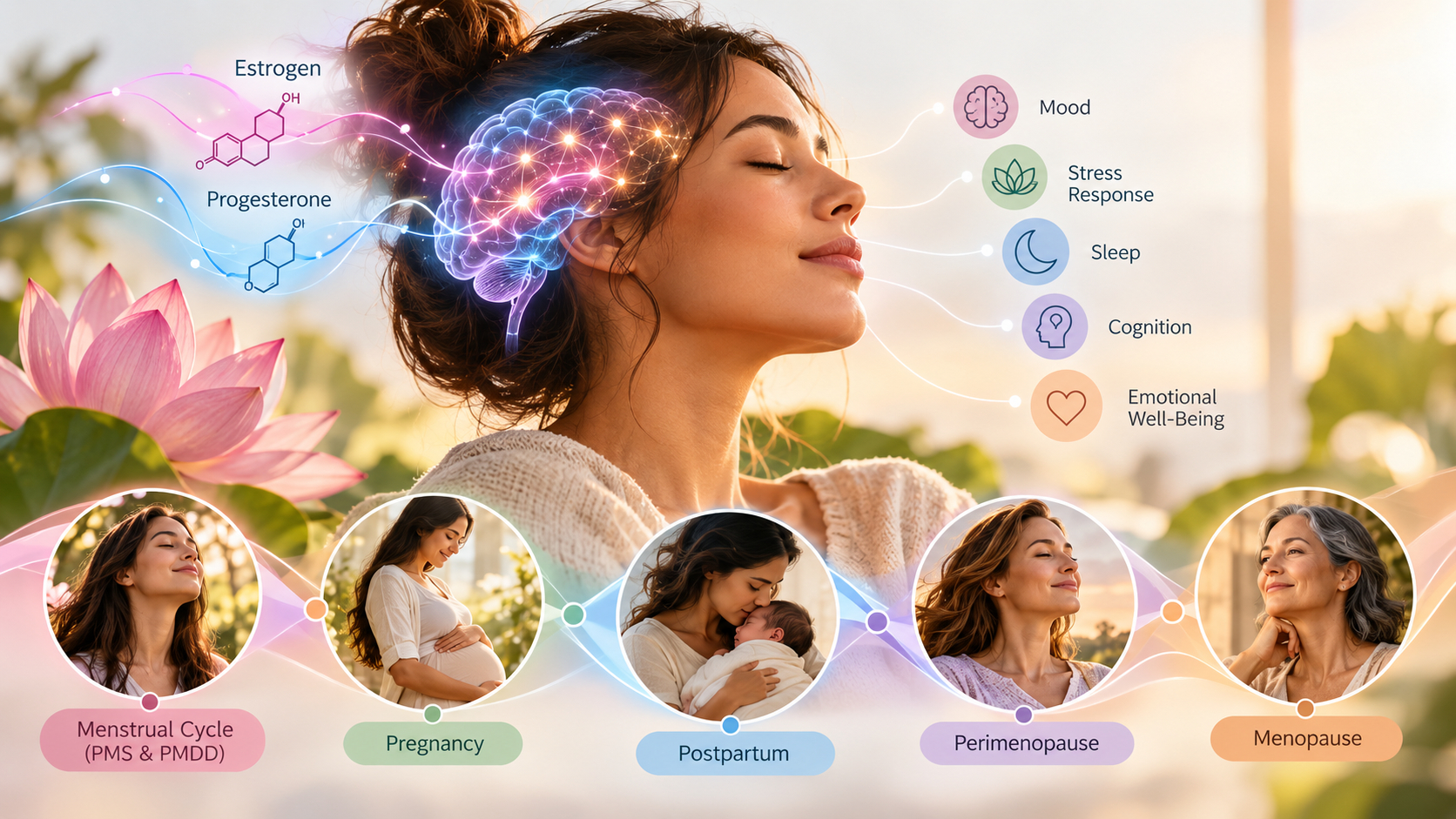
Hormones such as estrogen and progesterone interact with the brain and can influence mood, stress responses, sleep, cognition, and emotional regulation. For some women, periods of hormonal change may increase vulnerability to anxiety, depression, irritability, or other mental health symptoms.
At the same time, hormones are only one part of the picture. Genetics, previous mental health conditions, sleep, stress, relationships, physical health, medications, and life circumstances can all influence how a woman feels.
Understanding the connection between hormones and mental health can help you recognize patterns in your symptoms and know when it may be time to seek professional support.
At Lotus Holistic Healthcares, we believe women’s mental health deserves personalized care that considers the whole person—not just an individual symptom.
How Are Hormones Connected to Mental Health?
Hormones don’t just control reproduction. They also interact with the brain.
Estrogen and progesterone, for example, can influence neurotransmitter systems and brain circuits involved in mood, cognition, stress responses, and emotional regulation. Research suggests that changes in ovarian hormone levels—and particularly rapid fluctuations—may increase vulnerability to mood and anxiety symptoms in some women.
This does not mean every woman will experience mental health symptoms when hormone levels change.
Individual sensitivity matters.
Two women can experience similar hormonal changes but have completely different emotional responses. Previous depression or anxiety, stressful life events, sleep disruption, genetics, and other biological factors can all influence how someone responds to hormonal changes.
That is why it is more accurate to think about hormonal fluctuations and individual vulnerability rather than simply blaming mental health symptoms on a “hormonal imbalance.”
Which Hormones Affect Women’s Mental Health?
Several hormones can influence brain function and emotional well-being.
Estrogen and Mental Health
Estrogen is one of the most important hormones to understand when discussing women’s mental health.
The brain contains estrogen receptors, and estrogen can influence several neurotransmitter systems involved in mood and cognition, including serotonin, dopamine, and other signaling pathways.
Estrogen levels change substantially during the menstrual cycle and can fluctuate dramatically during reproductive transitions such as pregnancy, postpartum, and perimenopause.
For some women, these changes may coincide with:
- Mood changes
- Irritability
- Anxiety
- Low mood
- Changes in concentration
- Sleep problems
- Changes in emotional sensitivity
Research does not support the idea that estrogen simply acts as an “antidepressant hormone.” Its effects are more complicated and can depend on timing, the degree of hormonal change, individual biology, and other factors.
Progesterone and Mental Health
Progesterone rises after ovulation and changes substantially throughout pregnancy and the menstrual cycle.
Progesterone and its neuroactive metabolites interact with brain systems involved in anxiety, stress, sleep, and emotional regulation.
Some women appear particularly sensitive to changes in progesterone-related signaling. This may help explain why certain women experience significant emotional symptoms during specific phases of the menstrual cycle.
Again, the important factor may not simply be whether progesterone is “high” or “low,” but how the brain responds to changes in the hormone and its metabolites.
Testosterone
Women also produce testosterone, although typically at lower levels than men.
Testosterone contributes to several aspects of health, including sexual function, energy, and other physiological processes. Its relationship with women’s mental health is complex, and testosterone should not automatically be considered either a “good” or “bad” mood hormone.
Mental health symptoms should not be attributed to testosterone levels without appropriate clinical evaluation.
Cortisol and the Stress Response
Cortisol is often called the body’s stress hormone.
It is produced as part of the body’s response to stress and helps regulate metabolism, immune activity, blood pressure, and other processes.
Stress and hormonal systems influence one another. Chronic stress can affect sleep, mood, appetite, energy, and emotional regulation, while reproductive hormone changes can also influence how the body responds to stress.
This is another reason why mental health symptoms rarely have a single cause.
Thyroid Hormones
Thyroid hormones aren’t reproductive hormones, but they are important when evaluating mood-related symptoms.
Thyroid problems can contribute to symptoms such as fatigue, changes in mood, difficulty concentrating, and sleep problems.
For this reason, a healthcare professional may consider thyroid function when someone develops new or unexplained mental health symptoms.
How Hormonal Changes Affect Mental Health Throughout a Woman’s Life
Hormonal changes can occur throughout the lifespan. Some reproductive transitions are associated with greater vulnerability to mood or anxiety symptoms.
Puberty and Mental Health
Puberty is a period of significant biological, psychological, and social change.
Sex hormones begin changing rapidly, while the brain is also undergoing substantial development. Some adolescents experience changes in mood, irritability, anxiety, or depressive symptoms during this period.
However, puberty-related hormonal changes should not automatically be blamed for significant mental health symptoms.
Persistent sadness, severe anxiety, withdrawal, changes in behavior, self-harm, or major problems at school or home deserve professional attention.
The Menstrual Cycle and Mood
Hormone levels naturally rise and fall during the menstrual cycle.
Some women notice predictable changes in mood, energy, sleep, appetite, or emotional sensitivity during certain phases of their cycle.
For many women, these changes are mild.
For others, symptoms can be much more disruptive.
Keeping track of symptoms alongside menstrual-cycle dates can sometimes help identify whether symptoms follow a recurring pattern.
PMS and PMDD
Premenstrual syndrome, or PMS, can include both physical and emotional symptoms during the days before menstruation.
Symptoms may include:
- Irritability
- Mood changes
- Anxiety
- Fatigue
- Changes in sleep
- Changes in appetite
- Difficulty concentrating
A smaller percentage of women experience a much more severe condition called premenstrual dysphoric disorder (PMDD).
PMDD can cause significant mood symptoms that interfere with work, relationships, daily activities, and quality of life.
One important clue is timing: PMDD symptoms follow a cyclical pattern and improve after menstruation begins.
If severe emotional symptoms consistently appear before your period, tracking them and discussing the pattern with an OB-GYN, primary care clinician, or mental health professional can be helpful.
Pregnancy and Mental Health
Pregnancy involves major hormonal changes, with estrogen and progesterone reaching substantially higher levels.
At the same time, pregnancy can bring physical discomfort, sleep disruption, relationship changes, financial concerns, uncertainty, and other stressors.
As a result, mental health during pregnancy cannot be explained by hormones alone.
Depression and anxiety can occur during pregnancy and deserve professional attention.
Postpartum Hormonal Changes
After childbirth, estrogen and progesterone levels fall rapidly.
This dramatic biological transition occurs alongside major changes in sleep, daily routines, relationships, physical recovery, and the responsibilities of caring for a newborn.
Hormonal changes may contribute to postpartum depression in some women, but postpartum depression is a complex condition with multiple contributing factors.
Symptoms can include:
- Persistent sadness
- Anxiety
- Feelings of worthlessness or guilt
- Loss of interest in activities
- Severe irritability
- Difficulty bonding with the baby
- Changes in sleep or appetite
- Difficulty functioning day to day
Postpartum depression is treatable. Therapy, medication, or a combination of treatments may be recommended depending on the person’s symptoms and circumstances.
Perimenopause and Mental Health
Perimenopause is the transition leading up to menopause.
During this stage, estrogen and progesterone can become increasingly unpredictable.
Some women experience:
- Irritability
- Anxiety
- Depressed mood
- Sleep problems
- Brain fog
- Difficulty concentrating
- Emotional changes
Research suggests that some women become more vulnerable to depression and anxiety during the menopausal transition, particularly when hormone levels are fluctuating.
Sleep disruption caused by hot flashes or night sweats can also make emotional symptoms harder to manage.
A history of depression, anxiety, PMDD, or postpartum depression may also be relevant when evaluating mood symptoms during perimenopause.
Menopause and Mental Health
Menopause is reached after 12 consecutive months without a menstrual period.
By this stage, ovarian estrogen production has declined substantially.
Some women notice changes in mood, sleep, memory, or concentration around menopause. However, not every woman experiences significant mental health problems.
It’s also important to distinguish normal changes from a mental health condition.
Persistent depression, severe anxiety, or symptoms that interfere with everyday life should not simply be dismissed as “menopause.”
Can Hormonal Changes Cause Anxiety or Depression?
Hormonal changes can contribute to anxiety and depressive symptoms in some women, but saying that hormones directly “cause” every case of anxiety or depression would be inaccurate.
Research suggests that hormonal fluctuations may interact with brain chemistry, stress-response systems, genetics, previous mental health conditions, sleep, and environmental stressors.
For example, a woman who is particularly sensitive to hormonal fluctuations may notice significant mood symptoms during the premenstrual period, after childbirth, or during perimenopause.
Another woman may experience the same reproductive transition with little or no change in her mental health.
This individual variation is one reason professional assessment is important.
Hormones Are Not the Whole Story
One of the biggest misconceptions about women’s mental health is that emotional symptoms can always be explained by hormones.
They cannot.
Mental health is influenced by a combination of biological, psychological, and social factors.
These may include:
- Genetics and family history
- Previous depression or anxiety
- Chronic stress
- Trauma
- Poor sleep
- Relationship difficulties
- Financial stress
- Work demands
- Chronic medical conditions
- Medications
- Substance use
- Reproductive health conditions
The relationship can also work in both directions.
Mental health conditions can affect sleep, stress hormones, menstrual patterns, and overall reproductive health.
In other words, hormones and mental health are connected through a complex two-way relationship.
Signs Your Mood Changes May Be Connected to Your Hormonal Cycle
A hormonal connection may be worth discussing with a healthcare professional if you notice that symptoms:
- Appear at a predictable point in your menstrual cycle
- Consistently improve after your period begins
- Started or worsened during perimenopause
- Began during pregnancy or after childbirth
- Occur alongside major reproductive changes
- Return repeatedly during the same phase of your cycle
- Are accompanied by significant changes in sleep, energy, or physical symptoms
Keeping a daily symptom record for at least several weeks can help identify patterns.
Record your mood, anxiety, sleep, energy, physical symptoms, menstrual dates, and any major changes in medications or life circumstances.
This information can give your healthcare professional a clearer picture than trying to remember symptoms retrospectively.
How Do Doctors Evaluate Hormone-Related Mental Health Symptoms?
There isn’t one universal “hormone test” that can explain every mood symptom.
A healthcare professional may consider:
- Your symptoms — what you’re experiencing and how severe it is.
- Timing — whether symptoms follow a menstrual or reproductive pattern.
- Medical history — including previous depression, anxiety, thyroid problems, or other conditions.
- Medications and contraception — some medications or hormonal treatments may affect symptoms differently in different people.
- Sleep and stress — both can significantly influence mood.
- Menstrual and reproductive history — including pregnancy, postpartum experiences, and menopause transition.
- Laboratory testing when appropriate — such as thyroid testing when symptoms suggest a possible thyroid problem.
The goal isn’t simply to find a hormone that is “too high” or “too low.”
The goal is to understand the whole clinical picture.
What Can Help When Hormonal Changes Affect Mental Health?
Treatment depends on the underlying problem.
Depending on the situation, a healthcare professional may recommend:
Therapy
Psychotherapy can help with depression, anxiety, stress, relationship challenges, and coping with major reproductive transitions.
Medication
Antidepressants and other medications may be appropriate for certain mental health conditions.
For example, selective serotonin reuptake inhibitors (SSRIs) are commonly used to treat PMDD and depression.
Hormonal Treatment
Hormonal treatments may be appropriate for some women and some conditions.
However, hormone therapy isn’t appropriate for everyone, and the risks and benefits depend on factors such as age, symptoms, medical history, and the specific treatment being considered.
Treatment decisions should therefore be individualized with a qualified healthcare professional.
Lifestyle and Support
Healthy habits can also support mental well-being.
These may include:
- Maintaining a consistent sleep schedule
- Getting regular physical activity
- Eating a balanced diet
- Limiting alcohol and other substances that can worsen mood
- Staying socially connected
- Managing stress
- Seeking professional support when symptoms become difficult to manage
Lifestyle changes should complement—not replace—appropriate medical or mental health treatment when a clinical condition is present.
When Should You Talk to a Healthcare Professional?
You don’t have to wait until symptoms become severe before asking for help.
Consider speaking with a healthcare professional if mood or anxiety symptoms:
- Persist for several weeks
- Repeatedly interfere with work, school, relationships, or daily activities
- Become significantly worse around your period
- Develop during pregnancy or after childbirth
- Appear during perimenopause or menopause
- Make it difficult to sleep or function normally
- Feel substantially different from your usual emotional state
A primary care clinician, OB-GYN, psychiatrist, psychologist, or other qualified mental health professional can help determine whether your symptoms may be related to hormonal changes, another medical condition, a mental health disorder, or a combination of factors.
How Lotus Holistic Healthcares Can Support Women’s Mental Health
Women’s mental health is not one-size-fits-all.
At Lotus Holistic Healthcares, our approach focuses on understanding each person’s individual needs and developing personalized care rather than treating symptoms in isolation.
Our mental-health services include support for conditions such as anxiety disorders, mood disorders, insomnia, and perinatal mental health concerns.
We provide virtual mental-health care in Arizona, Oregon, Washington State, and Georgia, making it possible to access personalized support from home.
If hormonal changes, reproductive transitions, or other life circumstances are affecting your emotional well-being, speaking with a qualified mental-health professional can be an important first step.
Final Thoughts
Hormones and mental health are closely connected, but the relationship is complex.
Changes in estrogen, progesterone, and other biological systems can influence how some women experience mood, anxiety, sleep, and emotional well-being. These effects can become especially noticeable during periods of hormonal transition such as the menstrual cycle, pregnancy, postpartum period, perimenopause, and menopause.
Most importantly, you don’t have to figure it out alone.
If changes in your mood are persistent, disruptive, or connected to a reproductive transition, consider speaking with a qualified healthcare professional who can look at the whole picture and help you identify appropriate next steps.
At Lotus Holistic Healthcares, our goal is to provide compassionate, personalized mental-health care that considers the whole person.
Your mental health deserves to be understood—not dismissed as “just hormones.”
Frequently Asked Questions
Do hormones affect women’s mental health?
Yes. Hormones such as estrogen and progesterone interact with brain systems involved in mood, stress, sleep, cognition, and emotional regulation. Hormonal fluctuations can affect mental health in some women, particularly during certain reproductive stages.
Can low estrogen cause depression?
Changes in estrogen can be associated with depressive symptoms, particularly during periods of significant hormonal fluctuation such as perimenopause. However, depression has multiple potential causes, so low estrogen should not automatically be considered the explanation for depressive symptoms.
Can hormones cause anxiety?
Hormonal fluctuations can contribute to anxiety symptoms in some women. This may be particularly noticeable during the premenstrual period, postpartum period, or perimenopause. Stress, sleep, genetics, and previous anxiety disorders can also influence symptoms.
Why do I feel depressed before my period?
Some women experience mood symptoms during the days before menstruation because of sensitivity to normal hormonal fluctuations. When symptoms are severe, consistently occur before the period, and significantly interfere with daily life, PMDD may be a possibility worth discussing with a healthcare professional.
Can menopause affect mental health?
Yes. Hormonal fluctuations during perimenopause and lower estrogen levels after menopause can be associated with changes in mood, anxiety, sleep, and cognition. Life stress and other factors can contribute as well.
How long can postpartum depression last?
Postpartum depression can begin during pregnancy or after childbirth and can persist without treatment. It is a treatable medical condition, so women experiencing persistent sadness, anxiety, loss of interest, guilt, or difficulty functioning should speak with a healthcare professional rather than assuming the symptoms will simply disappear.
Should I get my hormones tested if I’m experiencing depression?
Not necessarily. Hormone testing isn’t automatically the answer for every person with depression. A healthcare professional can determine whether testing—such as thyroid testing—makes sense based on your symptoms and medical history.